Services / Ceiling Void Cleaning
Ceiling void
cleaning
above and below.
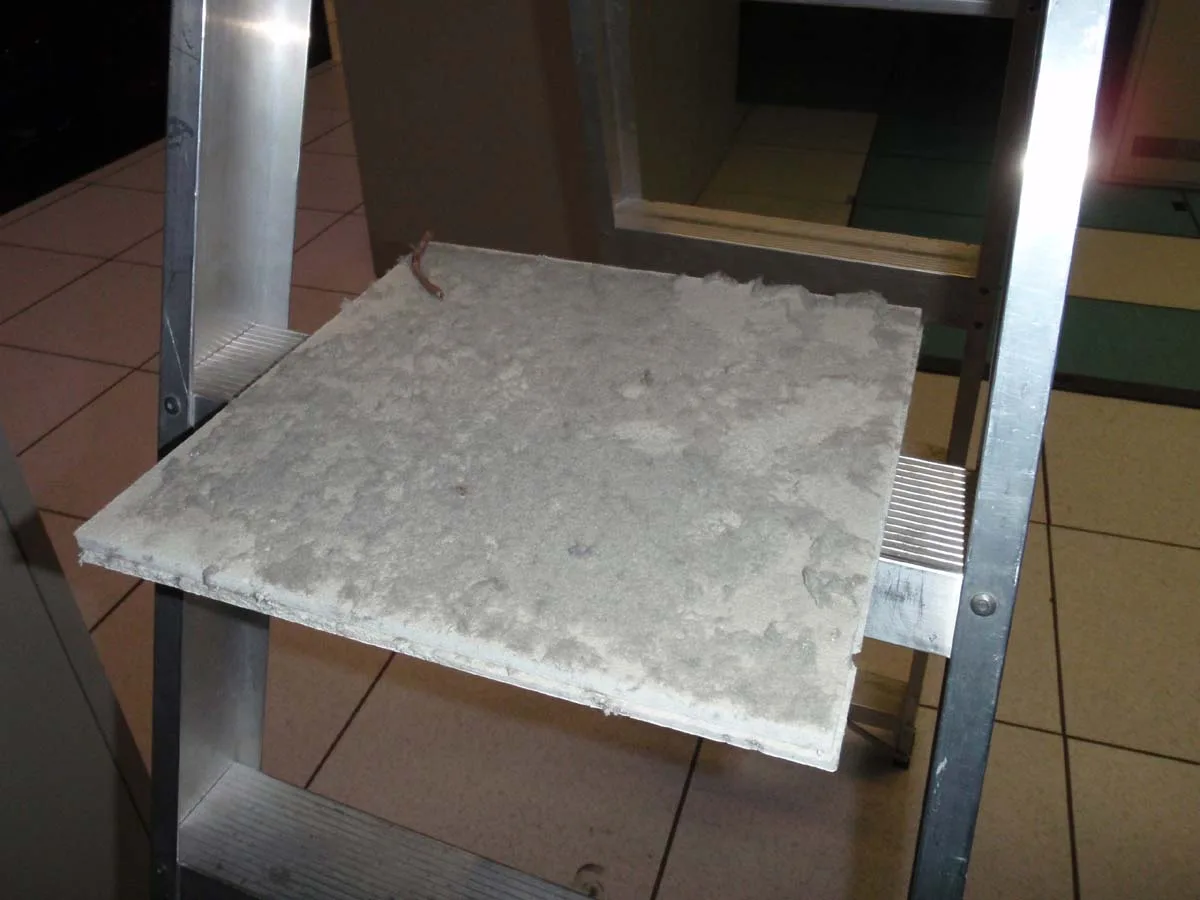
Ceiling voids in data centres and communications rooms accumulate years of dust, fibres, and construction debris. What is above your equipment eventually ends up inside it. Standard cleaning makes this worse. HEPA-grade cleaning addresses it.
Above
Why ceiling voids matter
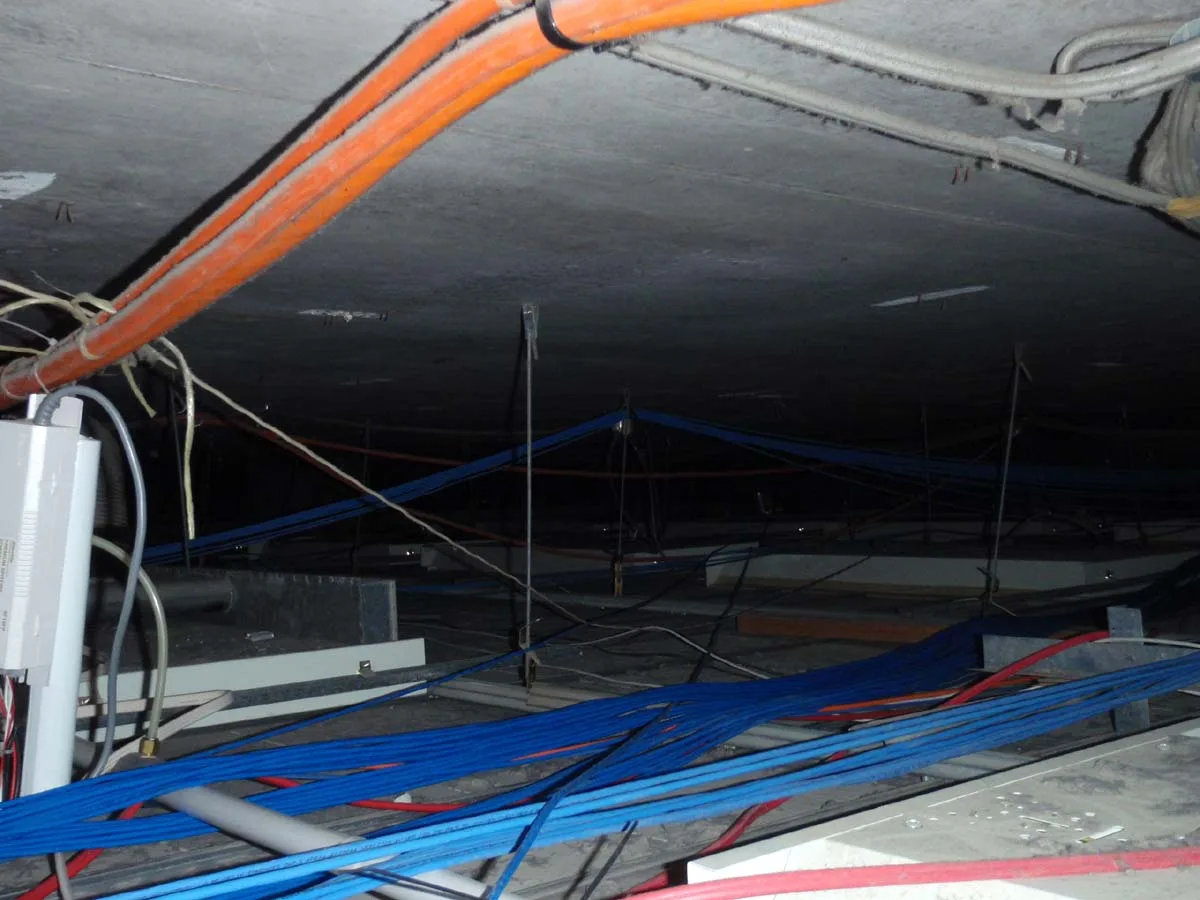
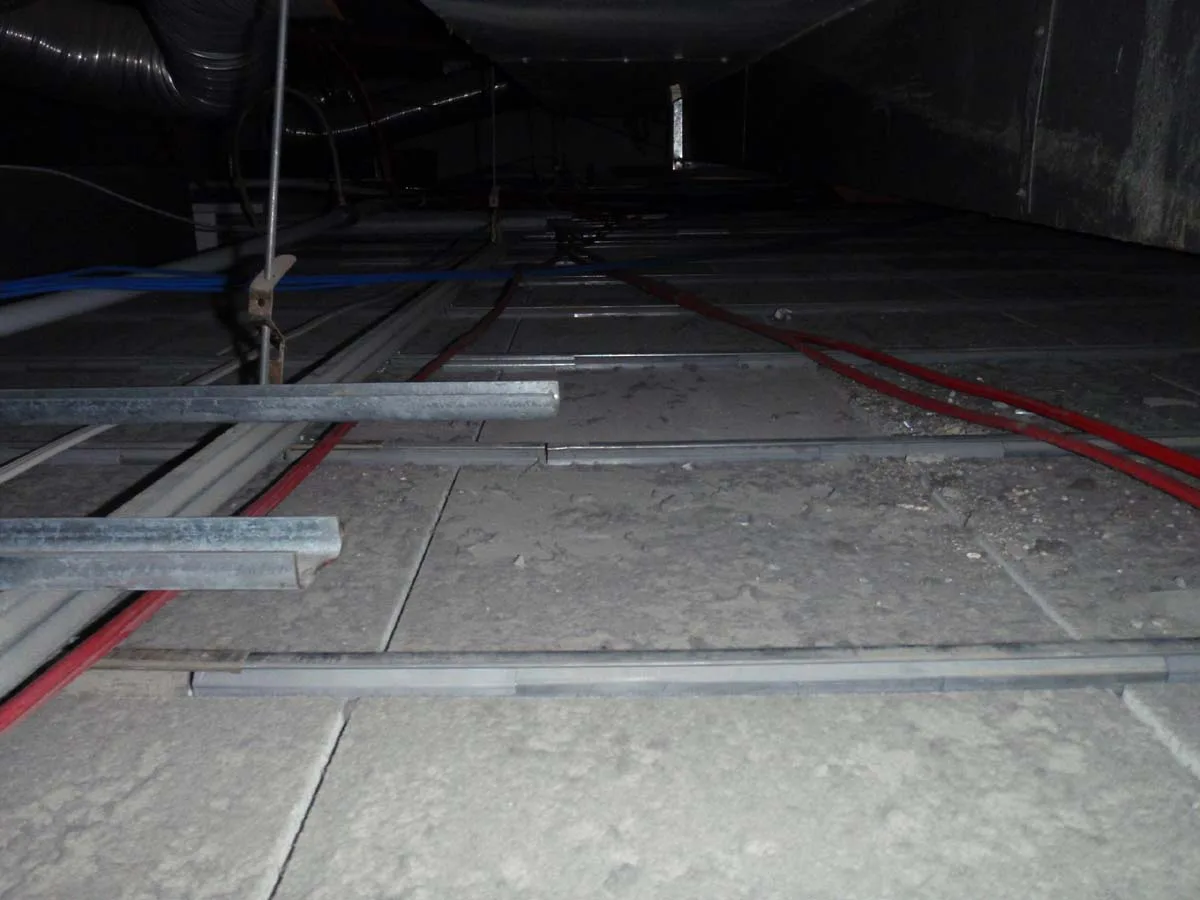
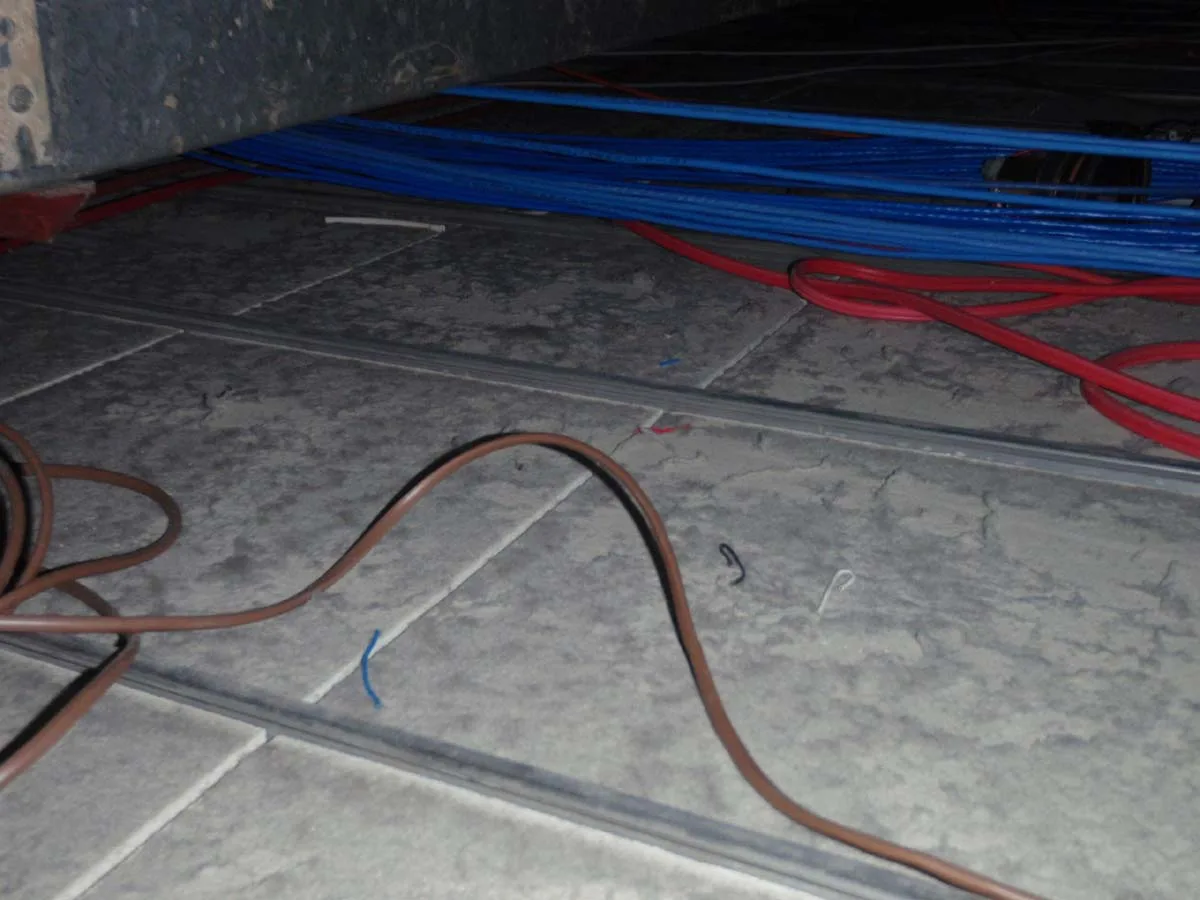
In data centres and communications rooms, ceiling voids carry cable trays, conduit, cooling infrastructure, and electrical services. Every penetration through the ceiling plane is a potential pathway for contamination to fall or be drawn into the room below. Over time, dust and fibres accumulate on cable trays, on top of conduit, on structural steelwork, and on any horizontal surface in the void space.
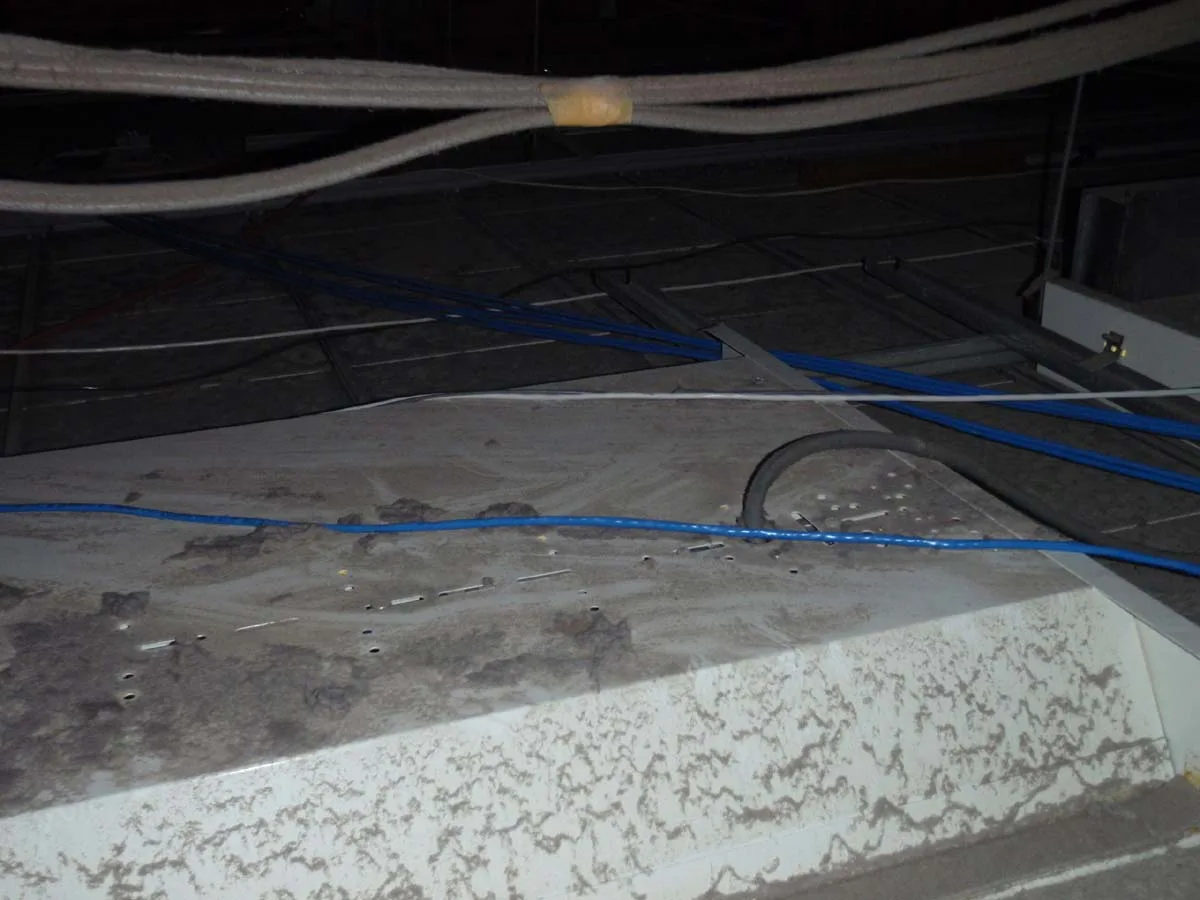
The problem is compounded when construction work has passed through the void. Gyprock dust, concrete particles, and cable debris settle on every surface and sit there undisturbed until something dislodges them. That something is usually airflow, vibration, or the next maintenance activity that opens the ceiling.
Standard cleaning in a ceiling void is counterproductive. Brushing and blowing redistributes particles into the airflow of the room below, delivering contamination directly to the equipment you are trying to protect. HEPA-grade vacuuming captures the particles at the source and removes them from the environment entirely.
Priority Data Services, Brisbane, QLD
01
Cable Tray
Decontamination
Cable trays are horizontal surfaces that accumulate heavy dust loads over time. We vacuum cable trays and cable bundles methodically, capturing particles rather than displacing them. Accessible surfaces are wiped with antistatic cloths after vacuuming.
Primary load surface
02
Structural and
Conduit Surfaces
Structural steelwork, conduit runs, and support brackets collect contamination on top surfaces and within recesses. These are often overlooked because they are not directly visible from below, but they are significant contamination reservoirs in older facilities.
Accumulated load
03
Penetration
Sealing Inspection
Every unsealed penetration through the ceiling plane is a pathway for contamination to enter the room and for fire suppression systems to be compromised. We identify and document unsealed penetrations so they can be addressed. Sealing of penetrations can be coordinated separately.
Pathway control
04
Construction
Debris Removal
Ceiling voids in facilities that have undergone fitout works or equipment upgrades frequently contain construction offcuts, unused fixings, and packaging materials. These are physical hazards as well as contamination sources. We remove and dispose of all construction debris found in the void space.
Physical hazards